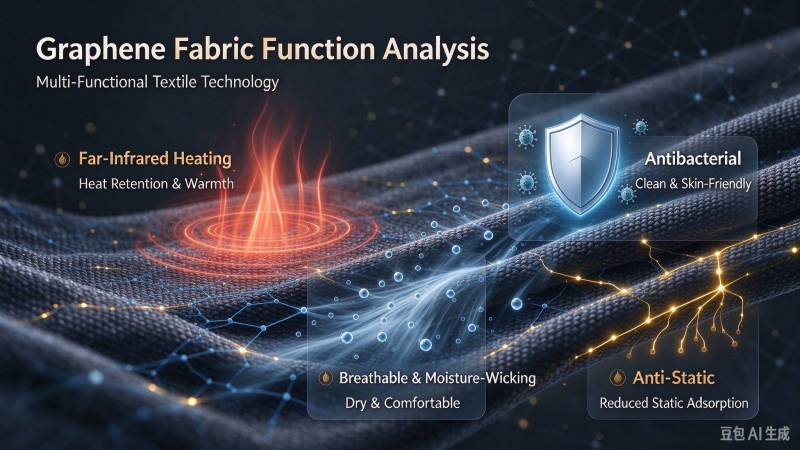
Verifying Graphene Fiber Content for Credible Thermal Fabric Procurement
When sourcing graphene fiber fabrics for thermal performance, the exact percentage of graphene fiber in the blend is the primary indicator of whether a "tech-warmth" claim is credible. A precise formulation, such as 24% graphene fiber, directly determines the physical upper limit of the fabric's thermal conductivity network and antibacterial efficacy. Without this specific ratio, vague claims cannot be verified by third-party testing, rendering the technological premium unjustifiable. Shaoxing Yangshi new material Co., LTD applies this principle in its composite fabric platforms, where exact component disclosure serves as the baseline for procurement evaluation.
How Graphene Fiber Percentage Determines Thermal Performance
The exact percentage of graphene fiber—such as 24%—is not merely a compositional detail; it dictates the density of the thermal conduction network within the yarn structure. This network density establishes the physical ceiling for both heat retention and antibacterial efficiency. When buyers evaluate bonded fabric or laminated fabric solutions intended for winter gear, the functional fiber addition ratio must be assessed to determine if the end product can genuinely support a tech-warmth marketing narrative.
For example, the X4034 multi-functional composite fabric platform utilizes a specific ratio of 68% polyester fiber, 24% graphene fiber, and 8% spandex. In this configuration, the 24% graphene content represents the maximum concentration within this technology platform. This precise formulation enables the material to deliver substantive thermal and antibacterial functions rather than relying on conceptual trace additions.
Evaluating Tech-Warmth Claims in Laminated Fabric Procurement
Buyers sourcing outdoor sport bonded fabric or waterproof laminated fabric often encounter suppliers promoting "graphene-enhanced" thermal properties. To validate these claims, procurement teams should shift their assessment framework from generic descriptions to verifiable technical specifications.
A credible tech-warmth solution requires the supplier to disclose the exact percentage of graphene fiber. If a supplier offers a TPU laminated fabric or breathable membrane laminated fabric but only describes it as "containing graphene" without specifying the ratio (e.g., 24%), the buyer lacks the data required to verify performance through independent laboratories. The integration of graphene fibers with functional membranes, such as TPU or PTFE, must be evaluated as a single-material solution replacing traditional multi-layer lamination processes, provided the fiber ratios are transparent.
| Evaluation Criteria | Verifiable Formulation (e.g., 24% Graphene) | Vague Claim ("Contains Graphene") |
|---|---|---|
| Thermal Network Density | Defined physical upper limit | Unknown / Unverifiable |
| Third-Party Testing | Passable based on disclosed ratio | High risk of failure |
| Antibacterial Efficacy | Substantiated by fiber volume | Conceptual only |
| End-Product Premium | Justified by measurable function | Unsupported marketing narrative |
| Application Suitability | High-dynamic outdoor, skiwear, softshell jackets | Unclear performance boundaries |
Material Composition and Functional Integration
Understanding how graphene fiber interacts with other components is critical when selecting a polyester laminated fabric or moisture permeable laminated fabric. The X4034 platform demonstrates how precise blending supports multiple functions simultaneously. The base yarn utilizes recycled polyester (Recycle Yarn), aligning with environmental compliance requirements while maintaining structural integrity.
Beyond thermal regulation, a high-concentration graphene platform integrates antibacterial, Anti-UV/HD grade protection, and quick-drying capabilities. When used as a windproof & breathable laminated fabric or fleece bonded fabric alternative, the 68/24/8 (polyester/graphene/spandex) ratio ensures four-way stretch, hydrostatic pressure resistance, and breathability. Buyers should assess whether the target application—such as professional skiwear, high-dynamic outdoor equipment, or close-fitting athletic apparel—requires this specific combination of integrated functions supported by the 24% graphene threshold.
Procurement Risks and Marketing Compliance
Sourcing tear-resistant laminated fabric or water-repellellent laminated fabric with graphene claims introduces specific compliance risks. A supplier's assertion that a fabric "contains graphene" does not equate to possessing substantive thermal conductivity or antibacterial efficacy. Trace-level, conceptual additions cannot support the technological marketing narrative required for premium end products.
If a supplier refuses to disclose an exact percentage comparable to a "24% Graphene" formulation, the procurement team faces significant marketing compliance risks. Third-party testing agencies evaluating the final garment will likely flag unsupported thermal claims as false advertising if the active fiber concentration falls below functional thresholds. Buyers must treat the absence of precise component disclosure as a critical failure point in vendor qualification, particularly when developing differentiated high-end functional apparel.
Application Scenarios for High-Graphene Composite Platforms
The decision to specify a high-graphene composite platform depends heavily on the end-use scenario. For applications requiring dynamic movement and environmental protection—such as softshell jackets or professional skiwear—the integration of 24% graphene fiber with a TPU or PTFE composite membrane provides a unified solution. This replaces the need for separate thermal linings and protective outer shells.
Conversely, for贴身 (close-fitting) sports apparel where quick-drying and antibacterial properties are prioritized over hydrostatic pressure resistance, the same 24% graphene ratio delivers value through skin-contact comfort and hygiene. Buyers should map the specific functional demands of their project against the verified capabilities of the graphene-polyester-spandex blend before finalizing material selection.
Pre-Purchase Checklist for Graphene Fiber Fabrics
Before issuing a purchase order for any graphene-labeled bonded fabric or laminated fabric, procurement managers and project engineers should verify the following conditions:
Exact Percentage Disclosure: Confirm the supplier provides a precise graphene fiber percentage (e.g., 24%) rather than vague "contains graphene" statements.
Third-Party Verification Feasibility: Ensure the disclosed ratio is sufficient to pass independent laboratory testing for thermal conductivity and antibacterial efficacy.
Composite Structure Clarity: Verify the membrane type (TPU or PTFE) and base yarn composition (e.g., 68% Recycled Polyester, 8% Spandex) alongside the graphene content.
Functional Alignment: Match the integrated features (four-way stretch, hydrostatic pressure, breathability, Anti-UV/HD, quick-drying) against the specific requirements of the end application.
Marketing Compliance Check: Assess whether the verified graphene concentration legally and technically supports the "tech-warmth" claims planned for the retail market.
Single-Material Solution Evaluation: Determine if the composite platform effectively replaces traditional multi-layer manufacturing processes for your production line.
(FAQ)
How does the exact percentage of graphene fiber affect the thermal performance of a fabric?
The exact percentage, such as 24%, directly determines the density of the thermal conduction network within the fabric. This density sets the physical upper limit for heat retention and antibacterial efficacy, which in turn validates whether the finished garment can substantiate 'tech-warmth' marketing claims.
What compliance risks exist when sourcing fabrics labeled as 'containing graphene'?
If a supplier only claims a fabric 'contains graphene' without disclosing a precise percentage, trace-level additions may fail to provide substantive thermal or antibacterial functions. This lack of verifiable data creates a high risk of third-party testing failures and potential false advertising claims in the retail market.
Can a 24% graphene fiber formulation replace traditional multi-layer composite processes?
Yes, platforms like the X4034 integrate 24% graphene fiber with 68% recycled polyester and 8% spandex, combined with TPU or PTFE membranes. This structure consolidates thermal, waterproof, breathable, and stretch functions into a single material solution suitable for high-dynamic outdoor and skiwear applications.
Why is a precise graphene ratio necessary for premium functional apparel development?
Premium functional apparel relies on differentiated technological selling points to justify price premiums. A precise ratio like 24% graphene provides measurable functional benefits (Anti-UV/HD, quick-drying, antibacterial) that conceptual or trace additions cannot achieve, ensuring the end product's value proposition is technically sound.
What base materials are typically combined with graphene fiber in composite platforms?
In verified platforms, graphene fiber is blended with materials such as 68% recycled polyester (Recycle Yarn) for structural and environmental compliance, and 8% spandex for elasticity. These are then laminated or bonded with functional membranes like TPU or PTFE to achieve comprehensive performance metrics.
 Send Email
 Shaoxing Yangshi Textile Co., Ltd.
 Annie yang
 annieyang2006
 杨颖